
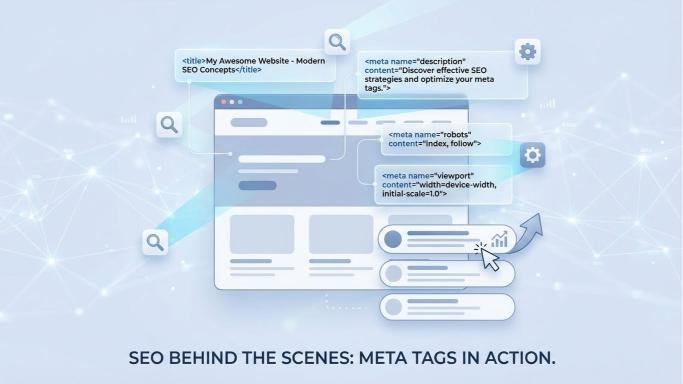
When people talk about SEO, they often mention keywords, backlinks, and content quality. But behind every well-ranked web page, there is a technical foundation quietly working in the background. One of the most important parts of that foundation is seo meta tags.
If you are building a website, running a blog, managing an online business, or learning digital marketing, understanding meta tags can significantly improve how search engines and users see your website. This guide explains everything in simple, human language no confusing jargon, no robotic explanations.
Table of Contents
What Are SEO Meta Tags?
SEO meta tags are snippets of code placed in the <head> section of a web page. They provide information about the page to search engines and browsers. These tags do not usually appear directly on the page content, but they strongly influence visibility, indexing, and click-through rates.
Think of meta tags as a short introduction that tells search engines what your page is about and how it should be treated.
Why Meta Tags Matter
Search engines use many signals to rank pages, and while meta tags alone won’t guarantee top rankings, ignoring them can hurt your SEO performance.
Here’s why meta tags are important:
- They help search engines understand page context
- They improve click-through rate from search results
- They control indexing and crawling behavior
- They improve user experience
A well-optimized page without proper meta tags is like a book without a title or summary.
The Most Important Meta Tags
Not all meta tags are equal. Some directly impact SEO, while others support usability or technical control.
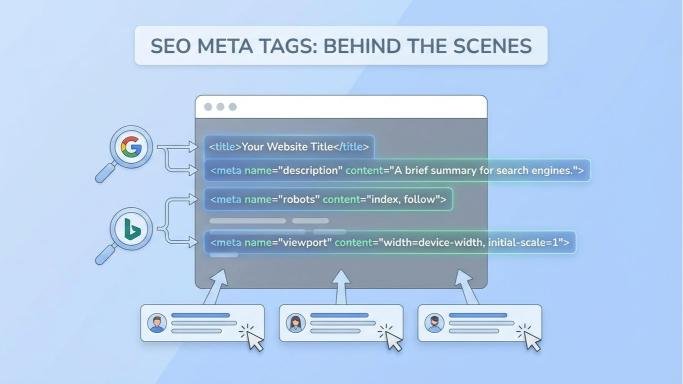
The most essential meta tags include:
- Title tag
- Meta description
- Meta robots tag
- Viewport meta tag
- Charset meta tag
Each one plays a different role, but together they create a strong SEO structure.
Title Tag: The Most Powerful Meta Tag
The title tag is the most important of all seo meta tags. It appears as the clickable headline in search engine results and in the browser tab.
A good title tag:
- Contains your main keyword
- Is clear and readable
- Stays within 50–60 characters
- Encourages users to click
Search engines give strong weight to title tags when ranking pages.
Meta Description: Boosting Click-Through Rate
The meta description summarizes your page content and appears under the title in search results.
Although it’s not a direct ranking factor, it strongly affects user behavior. Well-written seo meta tags can increase clicks even if your ranking stays the same.
A good meta description:
- Is 150–160 characters
- Clearly explains the page
- Includes a call-to-action
- Matches user intent
Table 1: Core Meta Tags and Their Purpose
| Meta Tag | Purpose | SEO Impact |
| Title tag | Page title for search engines | High |
| Meta description | Search result summary | Medium |
| Robots meta tag | Indexing & crawling control | High |
| Viewport | Mobile responsiveness | Indirect |
| Charset | Character encoding | Technical |
This table shows how meta tags work together rather than individually.
Meta Robots Tag: Controlling Indexing
The robots meta tag tells search engines whether to index a page or follow its links.
Common values include:
- index / noindex
- follow / nofollow
This is one of the most powerful meta tags because a wrong setting can completely remove your page from search results.
Viewport Meta Tag and Mobile SEO
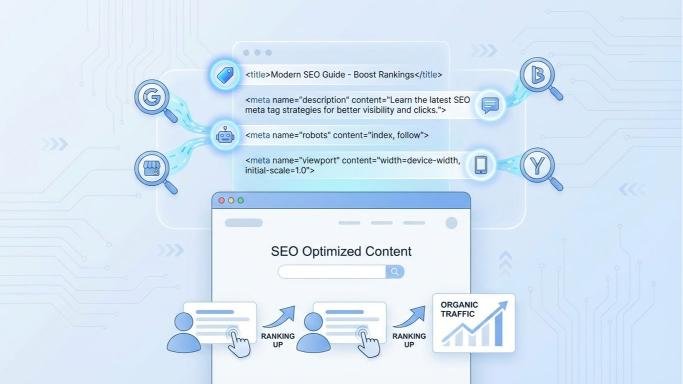
The viewport meta tag ensures your website displays properly on mobile devices. With mobile-first indexing, this tag has become essential.
While not traditionally listed among meta tags, it indirectly affects rankings by improving mobile usability and user experience.
Charset Meta Tag: Avoiding Display Issues
The charset meta tag defines how text is displayed on a page. Incorrect encoding can break content readability.
Though technical, it still supports meta tags by ensuring search engines read your content correctly.
Less Important (But Still Useful) Meta Tags
Some meta tags don’t directly affect SEO anymore but still serve specific roles:
- Author tag
- Refresh tag
- Revisit-after (ignored by major search engines)
Knowing which meta tags matter prevents wasted effort on outdated practices.
Common Meta Tags Mistakes
Many websites fail not because of content quality but because of basic mistakes in seo meta tags.
Common errors include:
- Duplicate title tags
- Missing meta descriptions
- Keyword stuffing
- Using the same meta tags across all pages
- Blocking pages with noindex accidentally
Avoiding these mistakes can instantly improve site performance.
Table 2: Good vs Bad Meta Tag Practices
| Practice | Good SEO | Bad SEO |
| Unique titles | ✅ Yes | ❌ No |
| Keyword stuffing | ❌ No | ❌ Harmful |
| Clear descriptions | ✅ Yes | ❌ No |
| Correct robots tag | ✅ Yes | ❌ Dangerous |
| Page-specific tags | ✅ Yes | ❌ No |
Strong seo meta tags follow clarity, relevance, and consistency.
How Meta Tags Affect Rankings Indirectly
Search engines don’t rank pages based only on seo meta tags, but they influence:
- Click-through rate
- Bounce rate
- Crawl efficiency
Better engagement sends positive signals to search engines.
Meta Tags for Blogs
For blog posts, seo meta tags help:
- Target long-tail keywords
- Improve article discoverability
- Increase organic traffic
Each blog post should have its own unique title and meta description.
Meta Tags for E-Commerce Websites
Product pages depend heavily on seo meta tags. Optimized tags can:
- Increase product visibility
- Improve conversion rates
- Reduce ad dependency
Avoid auto-generated tags and write custom ones for top products.

Meta Tags and Social Media (Bonus Tip)
Although not traditional seo meta tags, Open Graph and Twitter Card tags control how your page appears when shared on social media.
Better previews = more clicks = indirect SEO benefits.
Do Meta Keywords Still Matter?
No. The meta keywords tag is obsolete. Search engines ignore it due to abuse.
Modern seo meta tags focus on relevance, not keyword lists.
How to Write Perfect Meta Tags (Simple Formula)
- Identify one main keyword
- Write a natural title using that keyword
- Summarize the page honestly
- Match search intent
- Avoid duplication
This simple process works better than over-optimization.
Tools to Optimize Meta Tags
Popular tools include:
- SEO plugins
- Browser extensions
- SEO audit tools
These tools help monitor missing or weak seo meta tags without coding knowledge.
Meta Tags and Google Updates
Search engine algorithms change, but seo meta tags remain relevant because they support clarity and usability.
Well-written tags survive algorithm updates better than manipulative tactics.
Are Meta Tags Enough Alone?
No. SEO meta tags support SEO, but they must work alongside:
- High-quality content
- Good site structure
- Fast loading speed
- Mobile optimization
SEO is a system, not a single trick.
Why Beginners Should Master Meta Tags First
Learning seo meta tags is one of the fastest ways to improve SEO without advanced skills.
They offer:
- Quick wins
- Low effort, high impact
- Long-term value
That’s why they’re taught first in SEO education.
The Future of Meta Tags
While AI and search behavior evolve, seo meta tags will continue to act as a communication bridge between websites and search engines.
Clarity, relevance, and honesty will always matter.
Conclusion
SEO meta tags are small pieces of code with a big impact. They help search engines understand your content, guide users to click your pages, and protect your site from technical SEO mistakes. While they won’t rank a page alone, ignoring them can silently damage your visibility.
By writing clear titles, compelling descriptions, and using proper indexing controls, you build a strong SEO foundation that supports long-term growth. Mastering seo meta tags is not optional anymore it’s essential for anyone serious about online success.