
Understanding digital ads has become essential for everyone, whether you are a marketer, a business owner, a researcher, or simply a curious learner. Online platforms run millions of ads daily, and transparency has become more important than ever. This is exactly where the meta ad library steps in as an extremely powerful tool. It gives you open access to ads running across Facebook, Instagram, Messenger, and the Audience Network, making it one of the most valuable resources for competitive research and advertising insights.
The meta ad library is more than just a search tool, it’s a window into real-time marketing strategies used by brands worldwide. If you want to improve your campaigns, understand trends, or analyze public messaging, this is the place to start. Many people don’t fully understand its potential, which is why this guide explores everything you need to know, including features, benefits, use cases, categories, and advanced tips.
Table of Contents
What Is the Meta Ads Library?
The meta ad library is an online platform created by Meta to offer complete transparency into ads running on its network. It lets you search for any brand, keyword, topic, or advertiser and view the ads they are currently running or have run recently. This includes political ads, social-issue ads, brand ads, eCommerce ads, and more.
Meta introduced this tool to comply with global transparency standards, ensuring that anyone can see who is advertising and what message they are promoting. But marketers soon realized that the meta ad library is not only about transparency; it is also a goldmine for studying competitors and discovering proven ad strategies.
Why the Meta Ads Library Matters Today
Digital marketing has become extremely competitive. Brands spend billions on advertising, and new businesses appear daily. In this crowded environment, you need real-world data not guesses. The meta ads library provides exactly that.
By observing what successful brands are doing, you can better shape your own message, design, and targeting. The meta ads library helps marketers learn faster, avoid mistakes, and build ad strategies modeled after what is actually working right now. This reduces experimentation cost and increases the chance of success.
Key Features of the Meta Ads Library
The meta ads library offers a variety of features that help you analyze ads in a structured and meaningful way. This includes filters, categories, ad statuses, transparency labels, spending details, and advertiser profiles. Each feature is designed to help users interpret ads efficiently.
One of the most helpful features is the advanced search filter, which lets you narrow down ads by location, platform, time period, and ad type. Many professionals use the meta ad library daily to monitor brand behavior and market movement across different locations.
How to Access and Use the Meta Ads Library
Accessing the meta ads library is simple you don’t even need an account. You just open the platform and start searching. Once inside, you can explore advertisers, browse ads, copy ad IDs, analyze creative formats, and even track changes over time.
To start, you type a brand name or keyword. The meta ad library will then display all active and inactive ads related to your search. This makes it incredibly easy to study how competitors launch seasonal campaigns or adjust their ads during promotions.
Benefits of Using the Meta Ads Library
There are countless benefits to using the meta ad library, especially for small businesses and new marketers who need real-world inspiration. You can analyze what your competitors are doing, identify high-performance ad formats, and understand how different industries structure their messaging.
The meta ad library also helps you identify advertising patterns, such as frequency of promotions, color themes, ad lengths, and calls-to-action. This can guide your own content development process and help you optimize your marketing strategy.
Meta Ad for Competitive Research
The meta ad library is an exceptional tool for studying your competitors. You can quickly see what ads they run, how often they run them, and what messages they prioritize. Competitive analysis allows you to craft stronger offers, better creatives, and smarter audience targeting.
Many agencies use the meta ads before launching a campaign to ensure their content stands out. By learning from others, you can avoid common pitfalls and quickly improve your advertising performance.
Meta Ad Use Cases for Businesses
Businesses of all sizes benefit from the meta ads . Startups use it to study how established brands launch products. E-commerce stores use it to track pricing and promotional cycles. Local businesses use it to understand how regional competitors appeal to customers.
When used strategically, the meta ads becomes a roadmap that shows what successful brands do differently. This helps businesses refine their creative process and build more effective ads.
Meta Ad for Marketers and Agencies
Marketers rely on the meta ad library to build insights and inspiration. Agencies often use it for client presentations, reporting, and creative planning. Because it shows real-time ads, the tool helps marketers keep up with trends and apply them quickly.
From ad copy styles to video durations, the meta ads library gives professionals a clearer picture of what works. Agencies often audit multiple brands at once, creating a strong database of ideas for future use.
Meta Ads and Political Transparency
One important aspect of the meta ad library is its political ad database. It reveals who funded a political ad, how much they spent, and what audience they reached. This ensures full public transparency and prevents misleading or hidden political influence.
Countries worldwide now rely on the meta ad library to study political messaging and examine public communication strategies. It has become an essential tool for researchers and journalists analyzing political behavior.
Meta Ads Categories and Filters
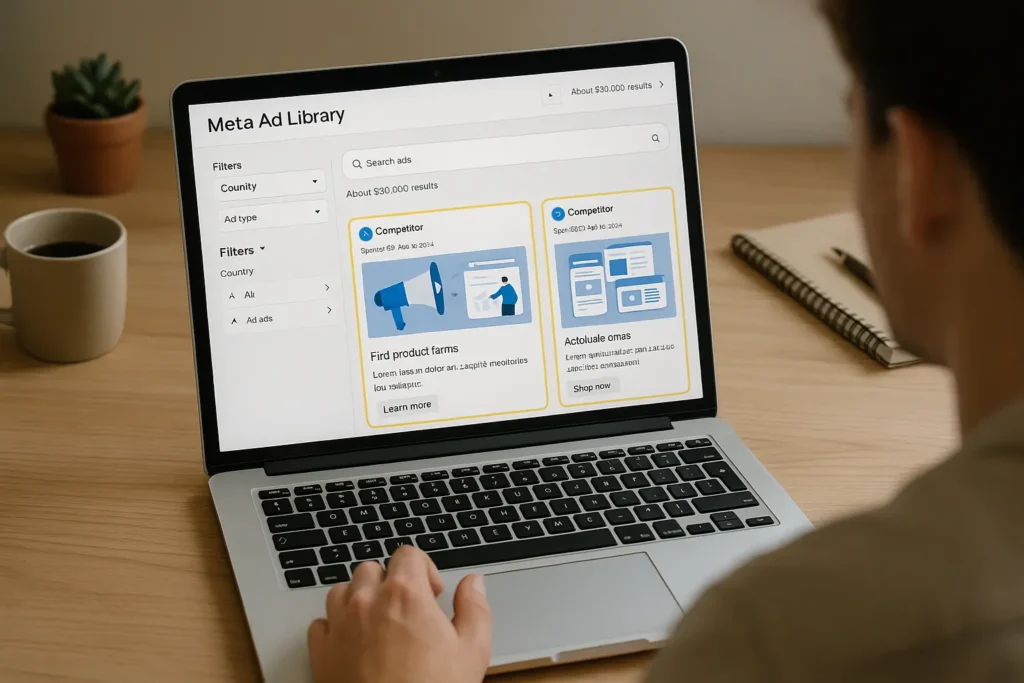
The meta ads library includes several filtering options such as ad type, language, country, and platform. This helps you sort through thousands of ads quickly. For example, if you only want to see video ads from a specific country, the filters make it possible with one click.
These filters help users get extremely targeted insights. The meta ad library makes it easy to compare ads between regions, brands, and campaign types.
Table 1: Key Filters in Meta Ad Library
| Filter Type | What It Does |
|---|---|
| Country Filter | Shows ads running in specific locations |
| Platform Filter | Limits results to Facebook, Instagram, Messenger, or Audience Network |
| Ad Type | Sorts ads into video, image, carousel, etc. |
| Ad Status | Displays active or inactive ads |
| Keyword Search | Finds ads related to your chosen topics |
Meta Ad Library for Content Inspiration
Creatives often struggle with fresh ideas. With the meta ads library, you can instantly explore thousands of concepts designed by professionals. This includes headlines, visuals, call-to-action styles, and ad layouts.
By studying these examples, you can generate content that resonates better with customers. The meta ad library is one of the fastest ways to spark creativity and avoid repetitive designs.
Meta Ad Library for Ad Copy and Creative Strategy
Copywriters and designers find the meta ad library extremely useful. You can observe how brands write their ad headlines, design their visuals, and position their offers. This helps copywriters understand tone, length, and style.
The meta ads library is especially helpful for improving call-to-action messaging, emotional appeals, and storytelling techniques used in digital ads.
Limitations of the Meta Ad Library
While the meta ad library is powerful, it does have limitations. It doesn’t show you audience targeting details, conversion performance, or backend analytics. This means you cannot know how well an ad actually performed.
However, even with these limitations, the meta ads remains incredibly valuable for analyzing external creative strategies.
Table 2: Pros and Cons of Meta Ad Library
| Pros | Cons |
|---|---|
| Free access | No targeting data |
| Shows real-time ads | No performance metrics |
| Useful for research | Creative-only insights |
| Global transparency | Cannot track spending for non-political ads |
Advanced Tips for Using Meta Ad Library
If you want to make the most of the meta ads , you can follow advanced techniques such as creating swipe files, monitoring specific brands daily, analyzing seasonal campaigns, and comparing industries.
Marketers often create “trend boards” based on what they observe inside the meta ad library, helping them stay ahead of their competitors.
Future of Meta Ad Transparency Tools
As digital advertising continues to grow, tools like the meta ad library will become even more important. Meta may introduce expanded analytics, deeper filters, or creative benchmarking features in the future.
The meta ad library already sets a high standard for ad transparency, and it will likely evolve to serve researchers and marketers even better.
Conclusion
The meta ads is one of the most powerful free tools available today for advertisers, marketers, journalists, and researchers. It lets you explore real-time ads from worldwide brands, giving you access to strategies, creative ideas, and competitive insights. Whether you run a small business or manage large campaigns, the meta ad library can guide your decisions and help you grow.